Rashmi 6 Paradigm

    The material is the product.

    Residue-based feedstock, ANDRITZ processing at Kharagpur, and documented traceability from collection to export.

    360 MT
    Daily capacity
    Industrial wood pellets
    100%
    Residue-based
    No purpose-felled timber
    150 km
    Sourcing radius
    Short-haul supply network

    Three streams.Never mixed.

    Agricultural residue, certified wood, and palm kernel shell enter, store, and ship as separate materials. Each stream becomes one product family — never a blended catalogue.

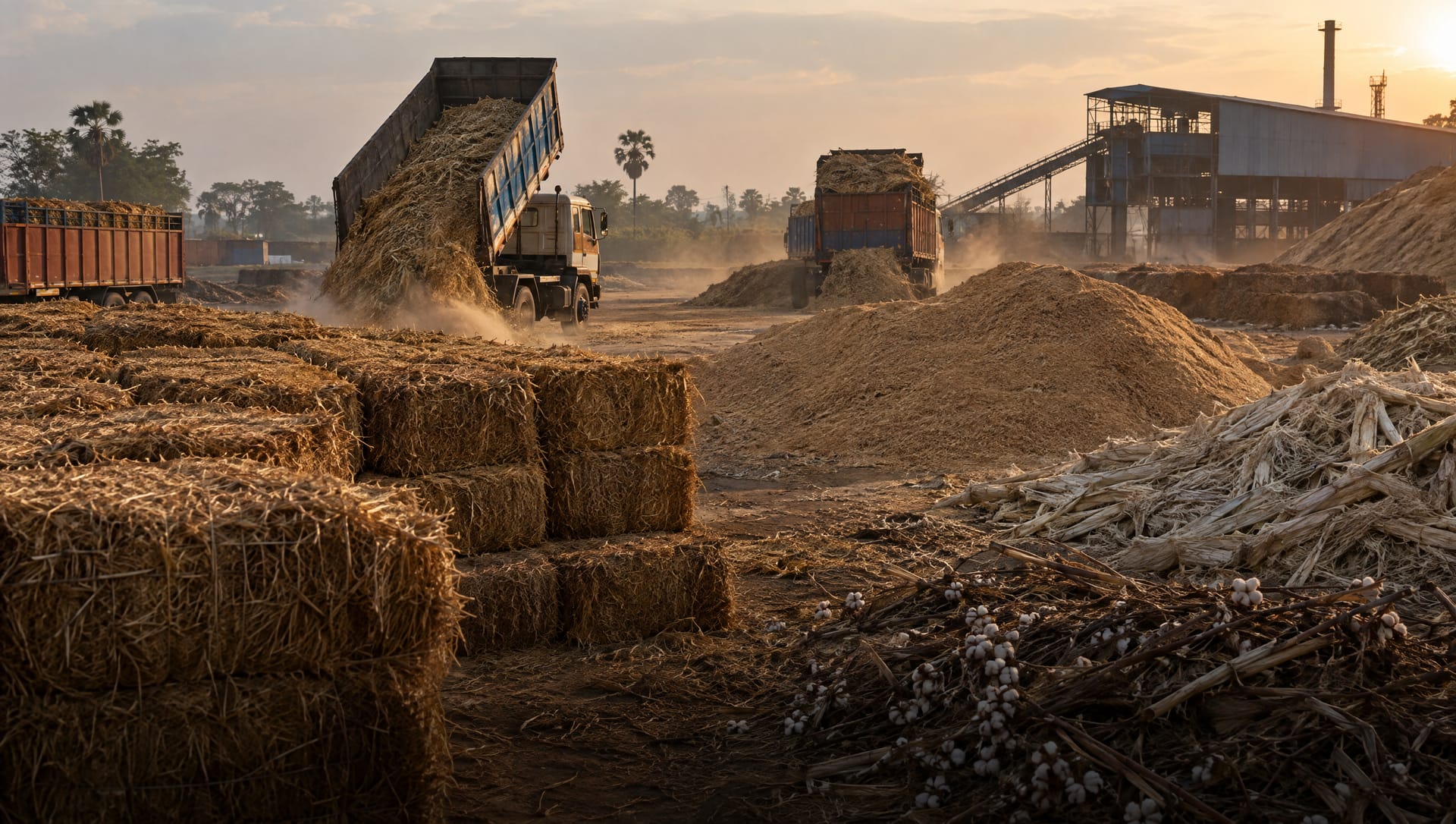
    Agricultural residue bales and husk being unloaded at the mill yard

    Agricultural residue

    Collected from farm-gate aggregators rather than grown as energy crops. This stream feeds Indian industrial boilers — not the export wood-pellet line.

    Origin

    Farm-gate aggregators across India

    Market

    Domestic India

    Materials

    Paddy straw · Rice husk · Mustard husk · Groundnut shell · Bagasse · Cotton stalk
    Becomes

    Agri-waste pellets

    Wood-pellet certifications do not apply to this grade.

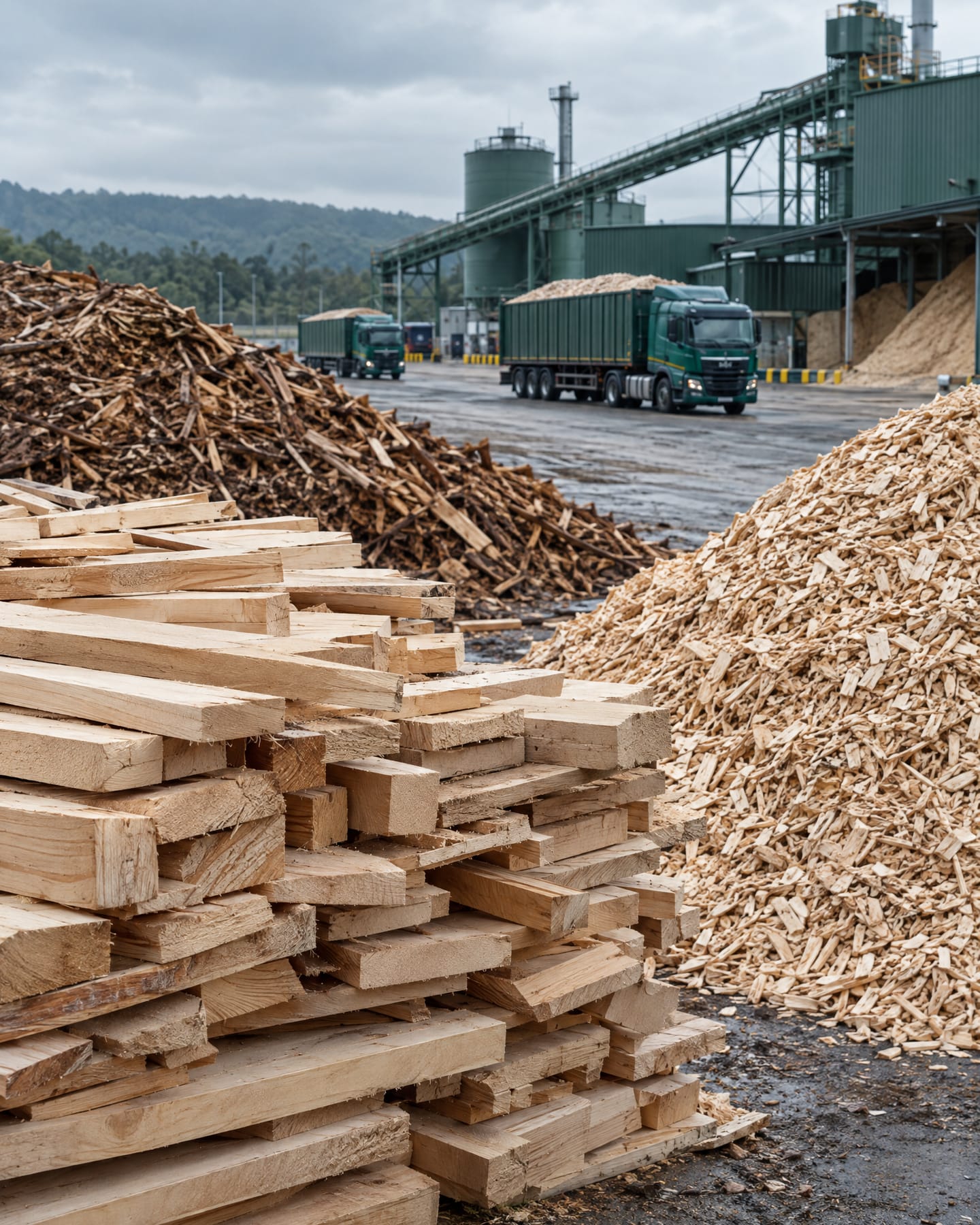
    Certified wood residue and chips staged at the mill yard

    Certified wood residue

    Recycled, reclaimed, and pre-consumer wood waste under chain of custody. This is the only stream that carries ISCC EU, FSC, PEFC, and GGL documentation.

    Origin

    Documented chain-of-custody suppliers

    Market

    Export only

    Materials

    Recycled wood · Reclaimed wood · Pre-consumer mill residue

    Becomes

    Export wood pellets

    Credentials never extend to biochar or charcoal.

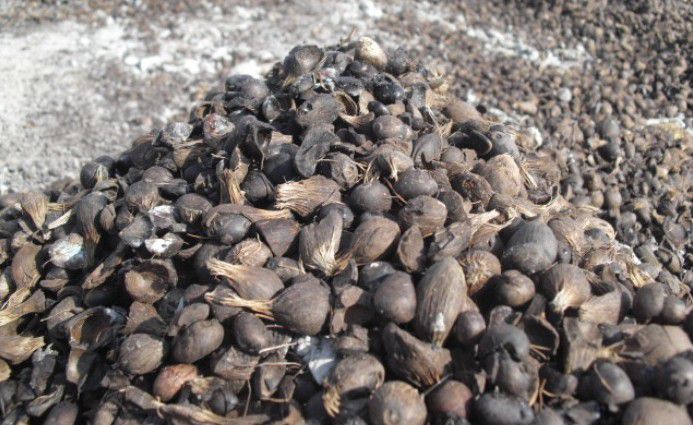
    Palm kernel shell feedstock sourced in Indonesia

    Palm kernel shell

    The hard casing left after palm oil extraction. Screened and moisture-controlled in Indonesia, then exported as its own fuel grade.

    Origin

    Indonesia · PT RDL Indo Green Venture

    Market

    Export fuel

    Materials

    Palm kernel shell

    Becomes

    PKS

    A distinct fuel. Never sold as a wood-pellet grade.

    Sustainable wood sourcing process

    Wood residues enter through a controlled procurement network built for legality, sustainability, and complete material traceability, with GPS-supported transport to our Kharagpur facility.

    100%

    Residue-based

    No purpose-felled timber

    GPS

    Transport tracked

    To Kharagpur plant

    11-step

    Traceability

    Source to customer

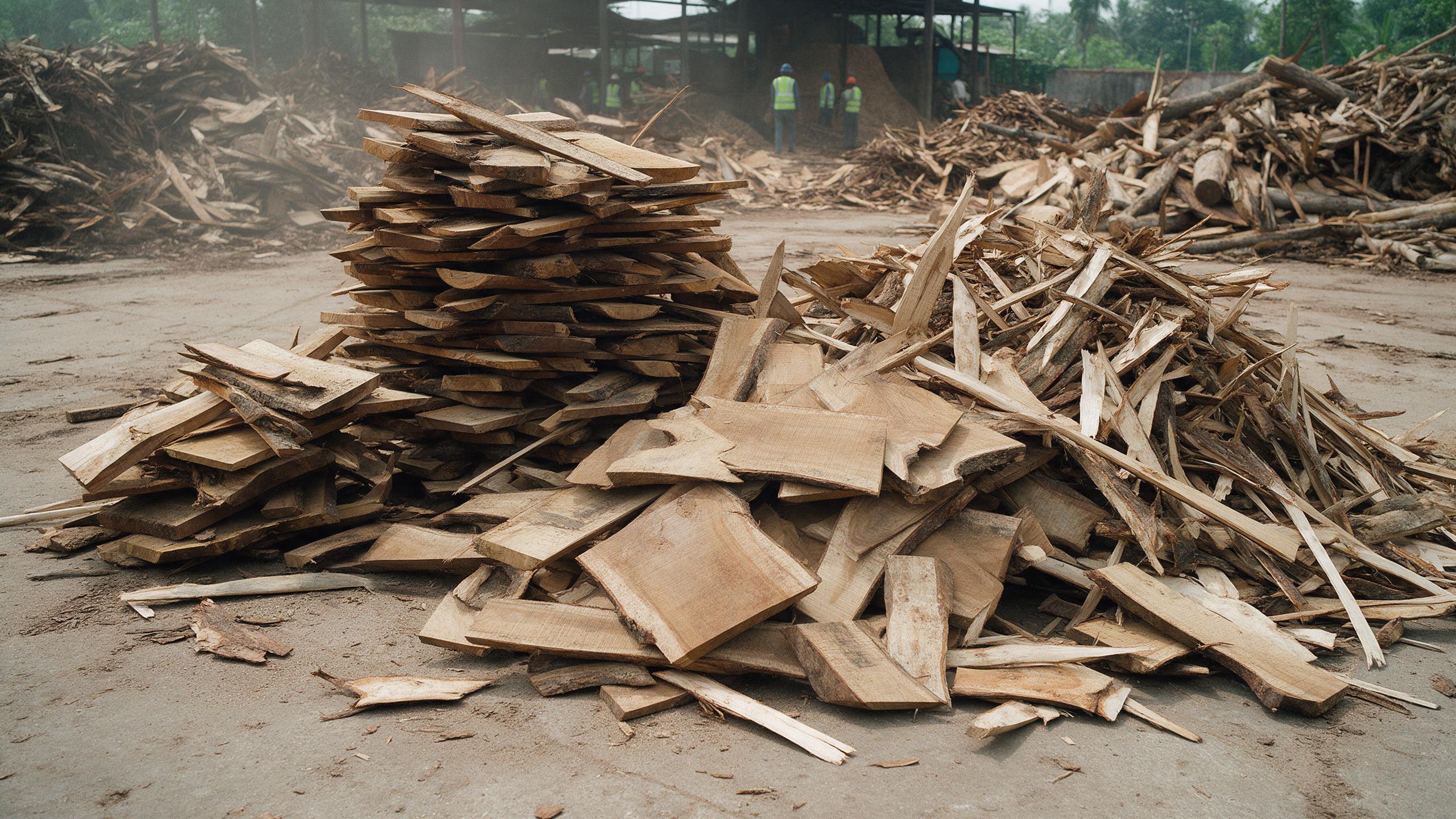
    Sawmill residues from wood processing

    Sawmill residues

    Wood offcuts and trim pieces from milling

    Wood offcuts

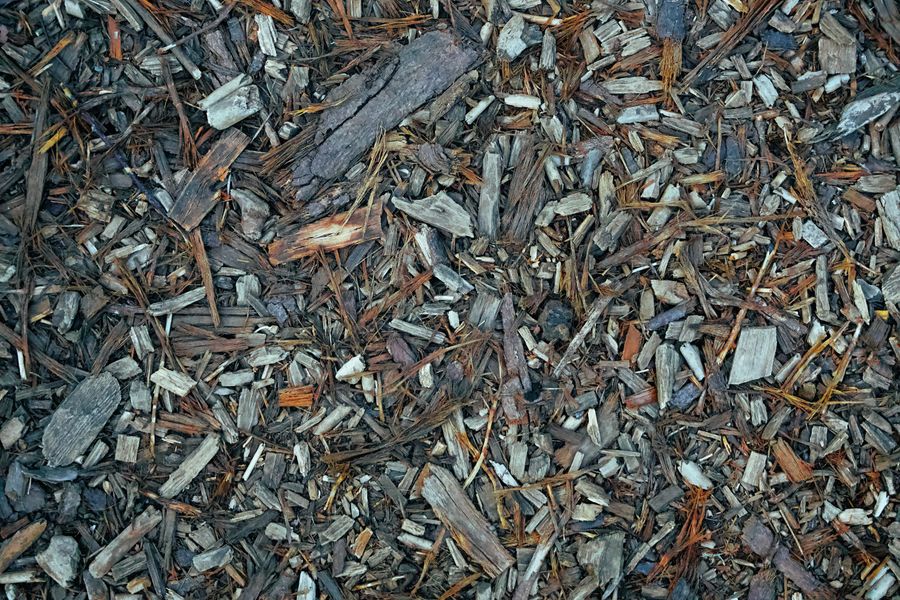
    Wood chips stored at raw material yard

    Wood chips

    Fine sawdust biomass feedstock

    Sawdust

    Bark-free reclaimed wood waste for pelletizing

    Bark-free wood waste

    Structured receiving from first checkpoint

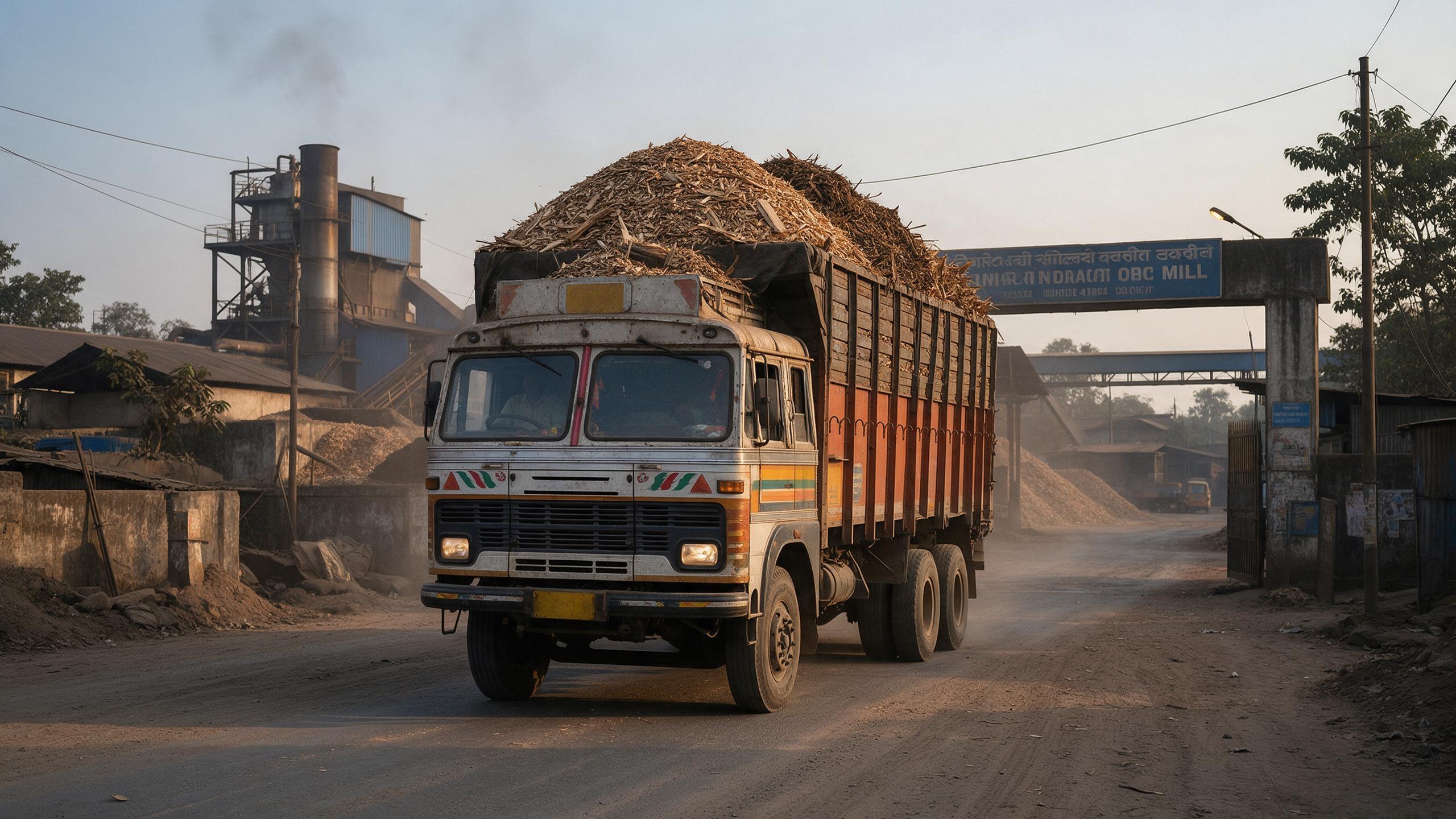
    Truck receiving raw material at the facility gate

    Gate & security

    Vehicle entry and security verification.

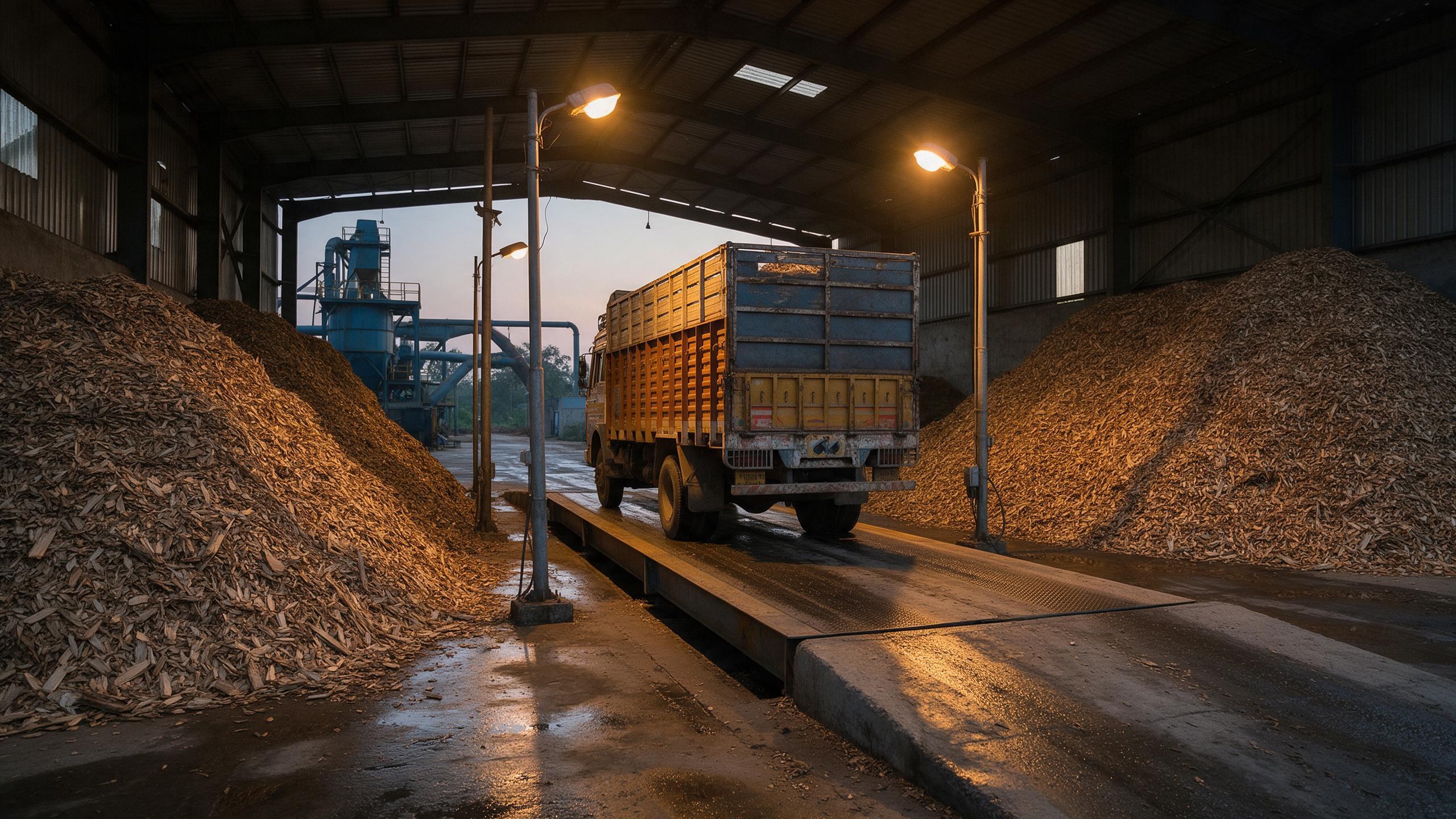
    Weighbridge platform beside feedstock piles at the mill

    Weigh & test

    Weighbridge, moisture testing, and visual inspection.

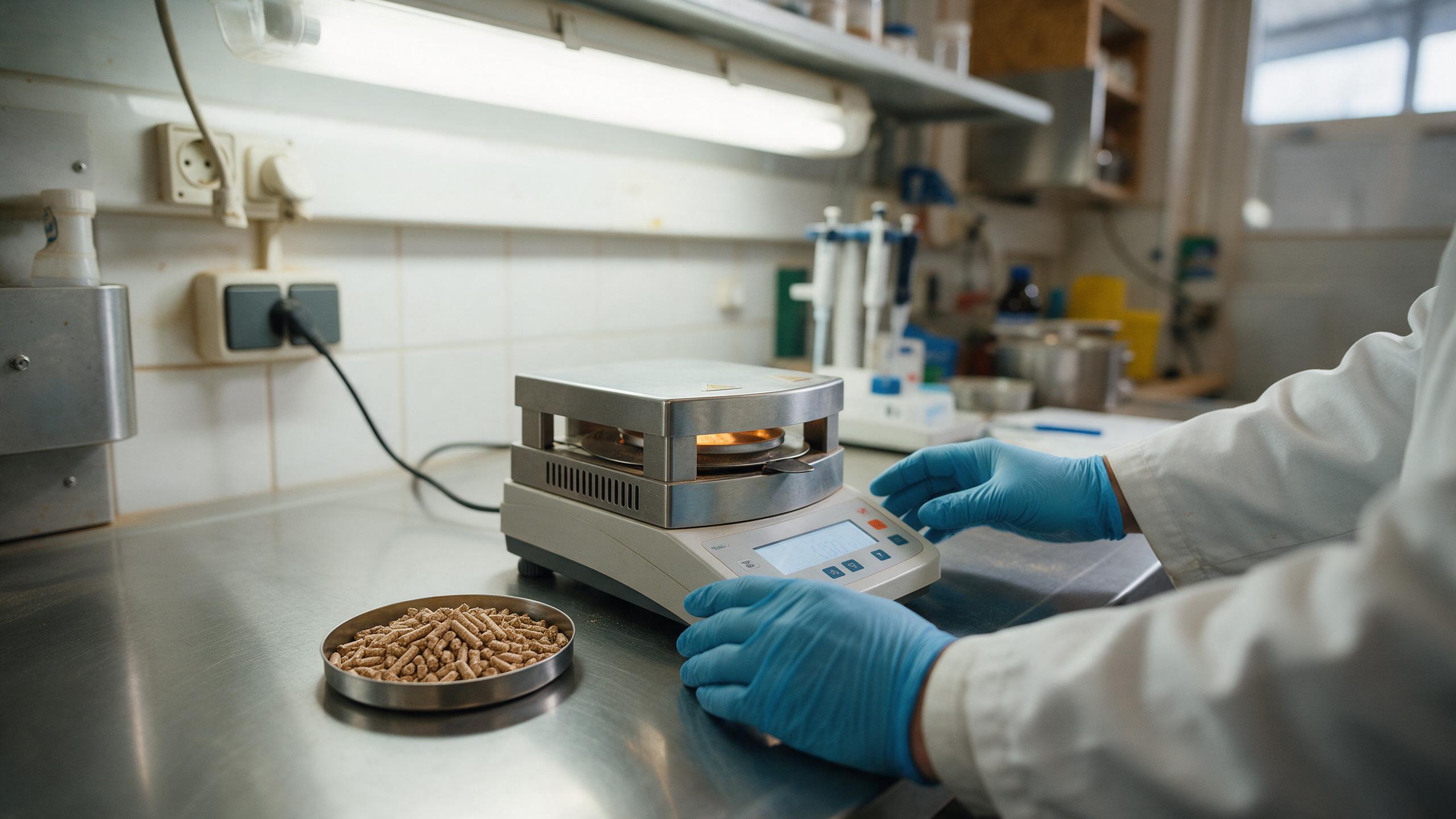
    Quality control laboratory testing incoming residue

    Verify & batch

    Origin checks, material grading, and batch identification.

    Wood pellets after processing on the production line

    Production issue

    Yard allocation, planning, and controlled issue to line.

    One documented chain connects source to delivery

    Logistics and supply chain operations for biomass export

    11 documented checkpoints from supplier to customer delivery

    Forest source for wood residue supply
    01-02

    Supplier & purchase

    Verified forest and mill origins with documented purchase orders.

    GPS-tracked truck transporting biomass feedstock
    03-04

    Transport & classification

    GPS-tracked vehicles with material type and grade logged at intake.

    Segregated raw material storage yard
    05-06

    Receiving & storage

    Weighbridge intake, batch ID, and segregated yard allocation.

    Quality control laboratory testing
    07-08

    QC & production

    Laboratory approval linked to each production batch on the line.

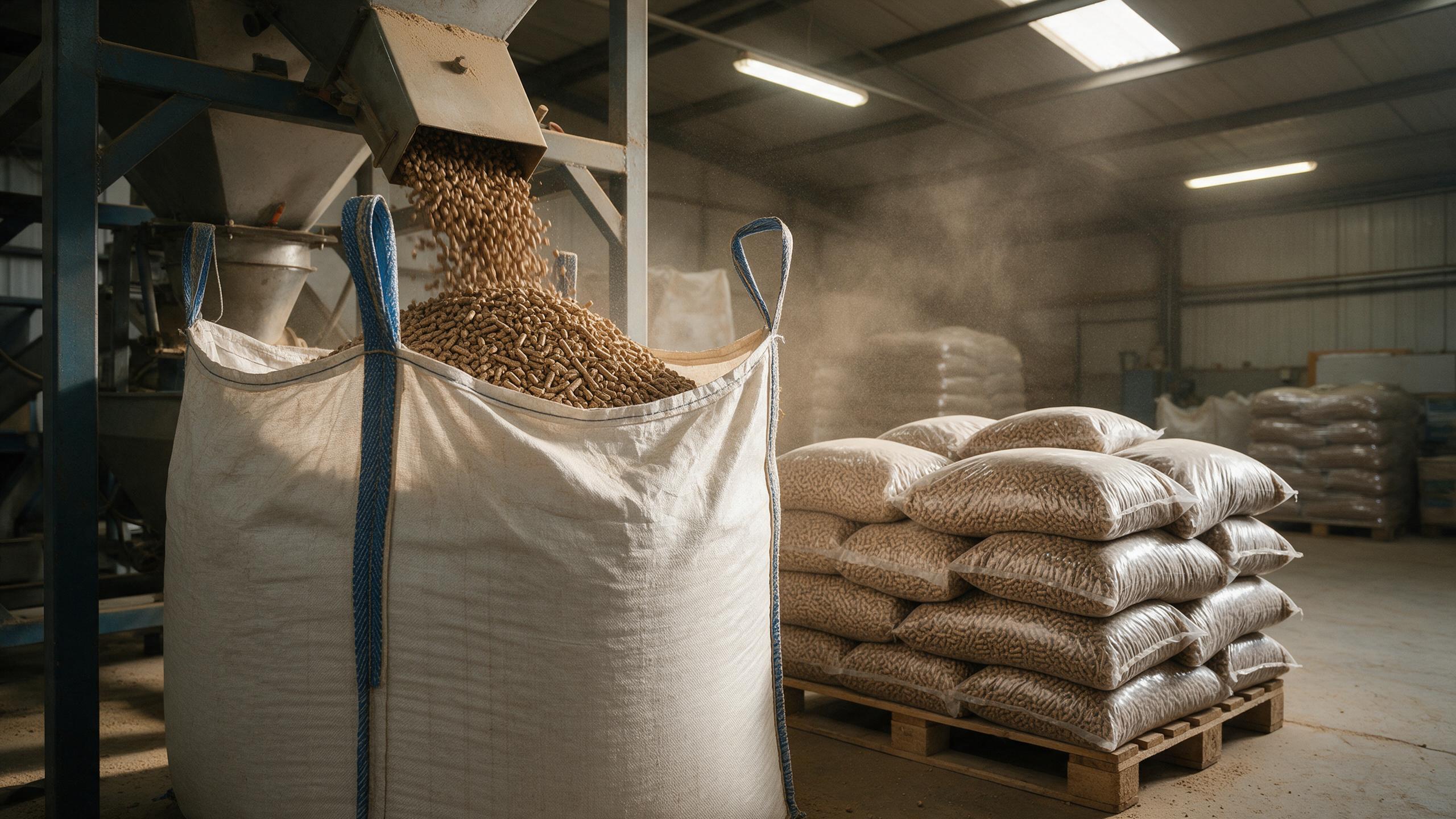
    Finished pellet packing and batch identification
    09

    Packing & identification

    Finished pellet batches tagged before warehouse release.

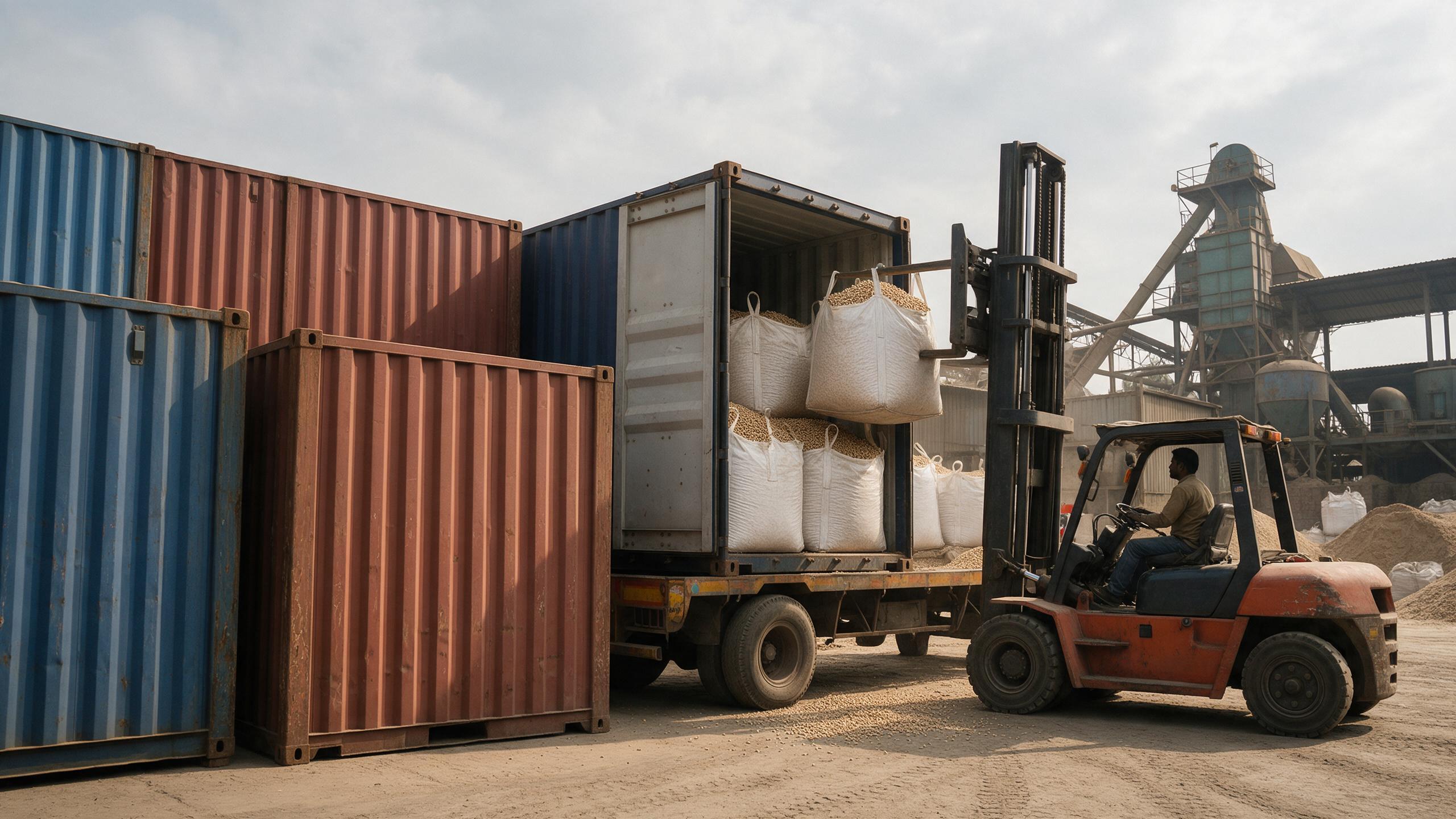
    Shipping containers prepared for export dispatch
    10-11

    Dispatch & delivery

    Export documentation tied to container dispatch and customer delivery.

    Incoming mill residues inspected at the plant gate

    Verified intake

    Responsible sourcing

    Every supplier and material type verified before it enters the plant.

    Separate yard bays for chips, sawdust and mill offcuts

    Batch control

    Segregated storage

    Material types kept separate through yard storage and production.

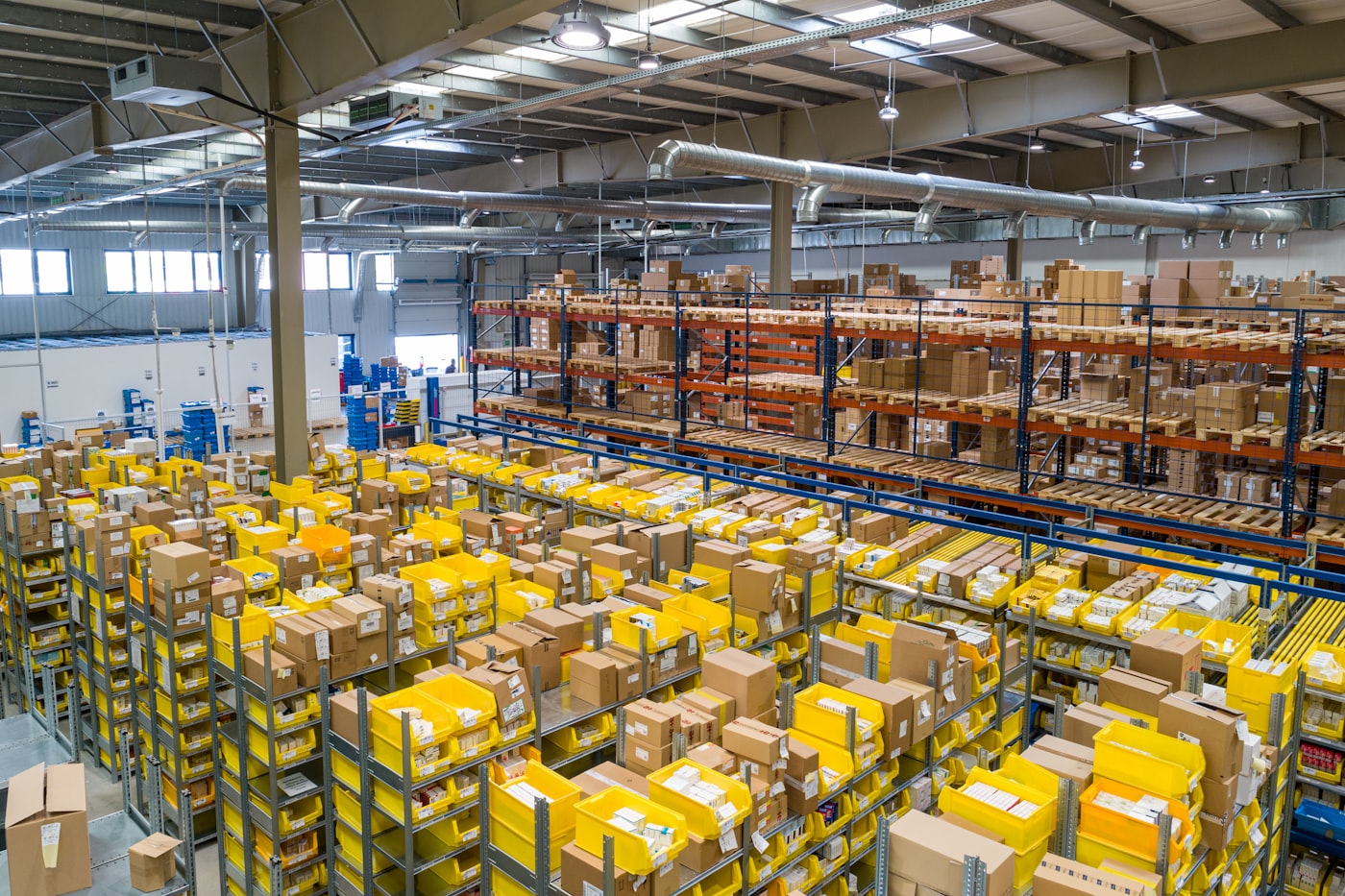
    Finished industrial wood pellets ready for batch dispatch

    Source to customer

    Documented traceability

    One recorded chain from collection point to customer dispatch.

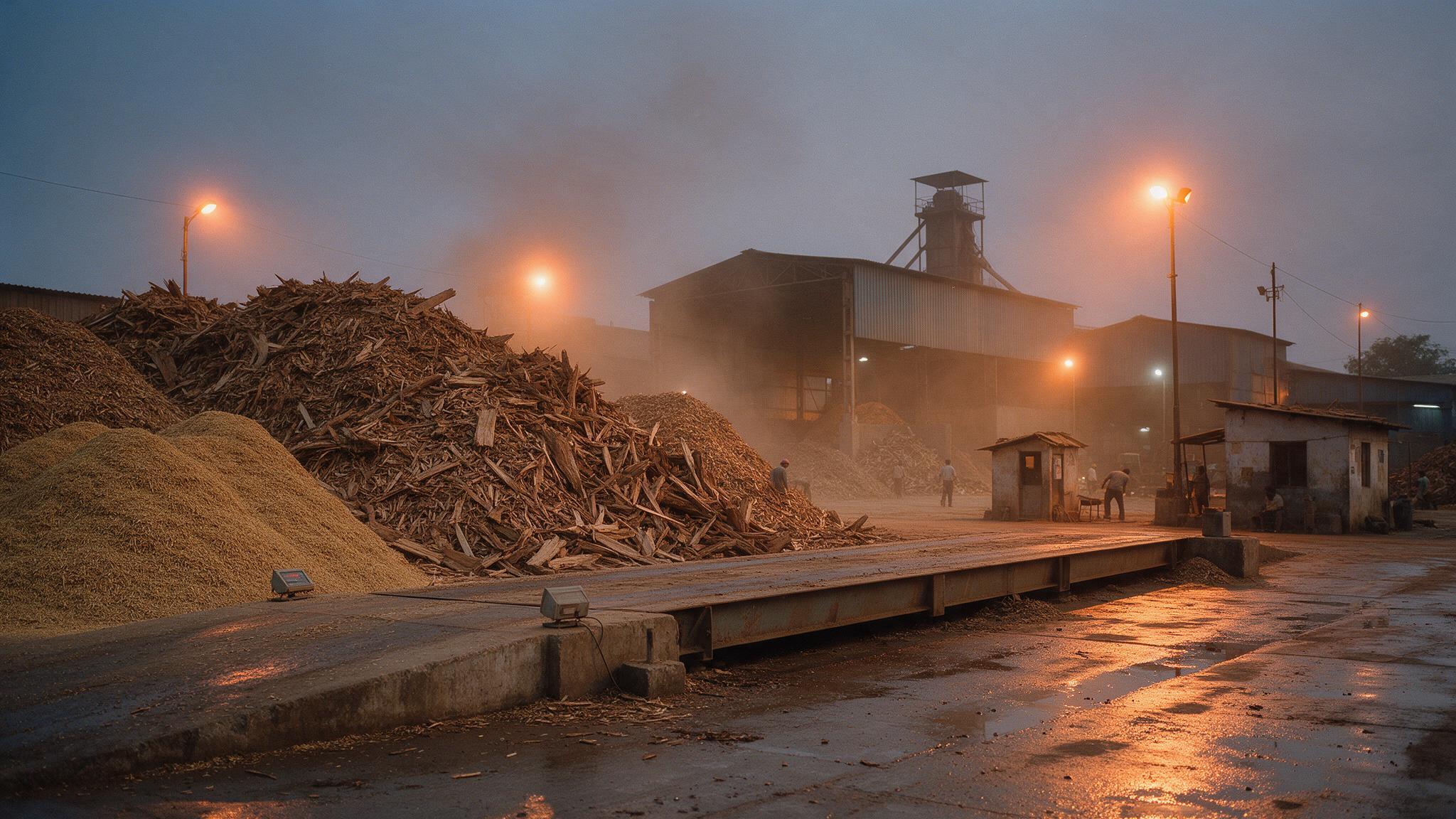
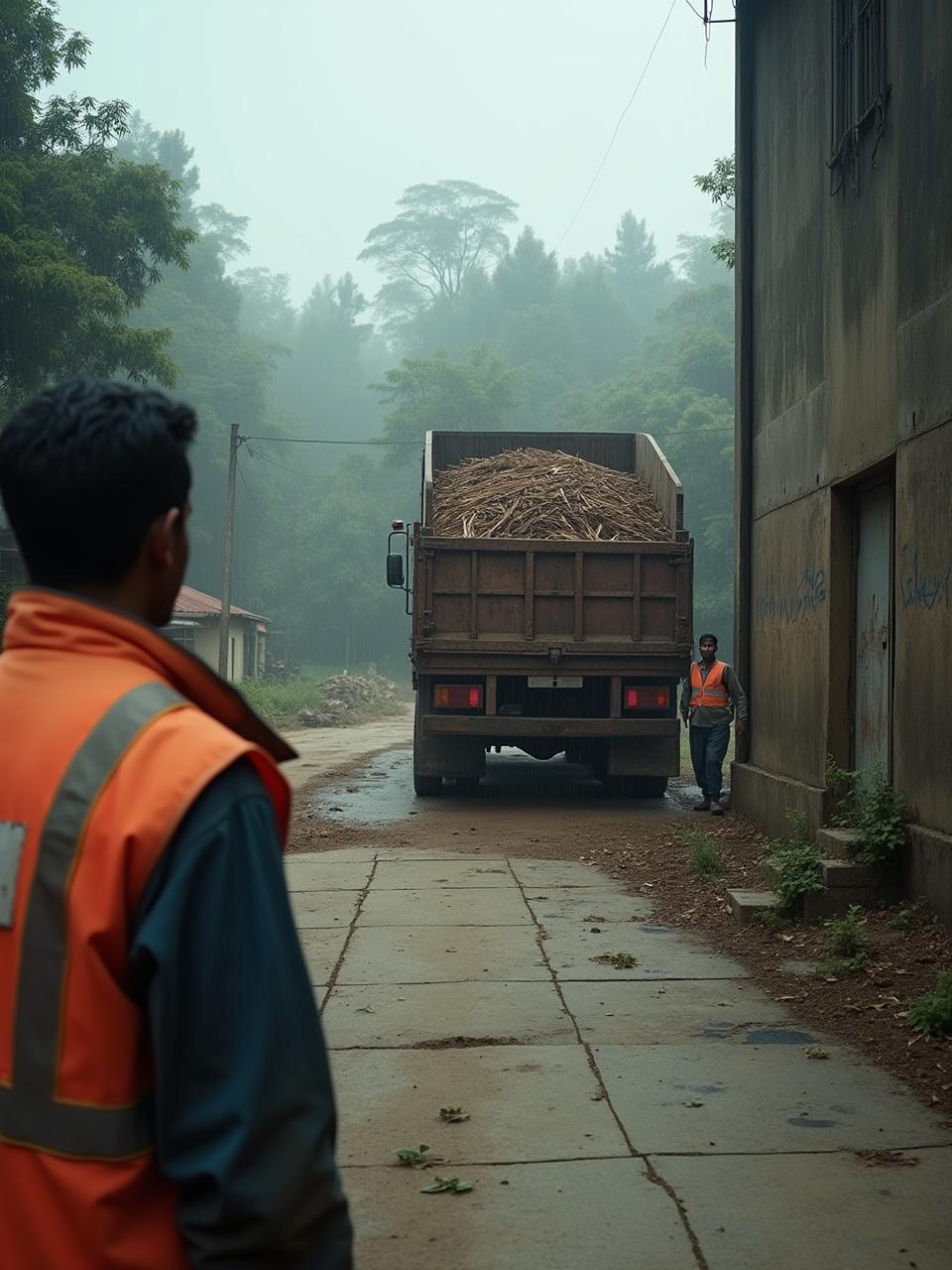
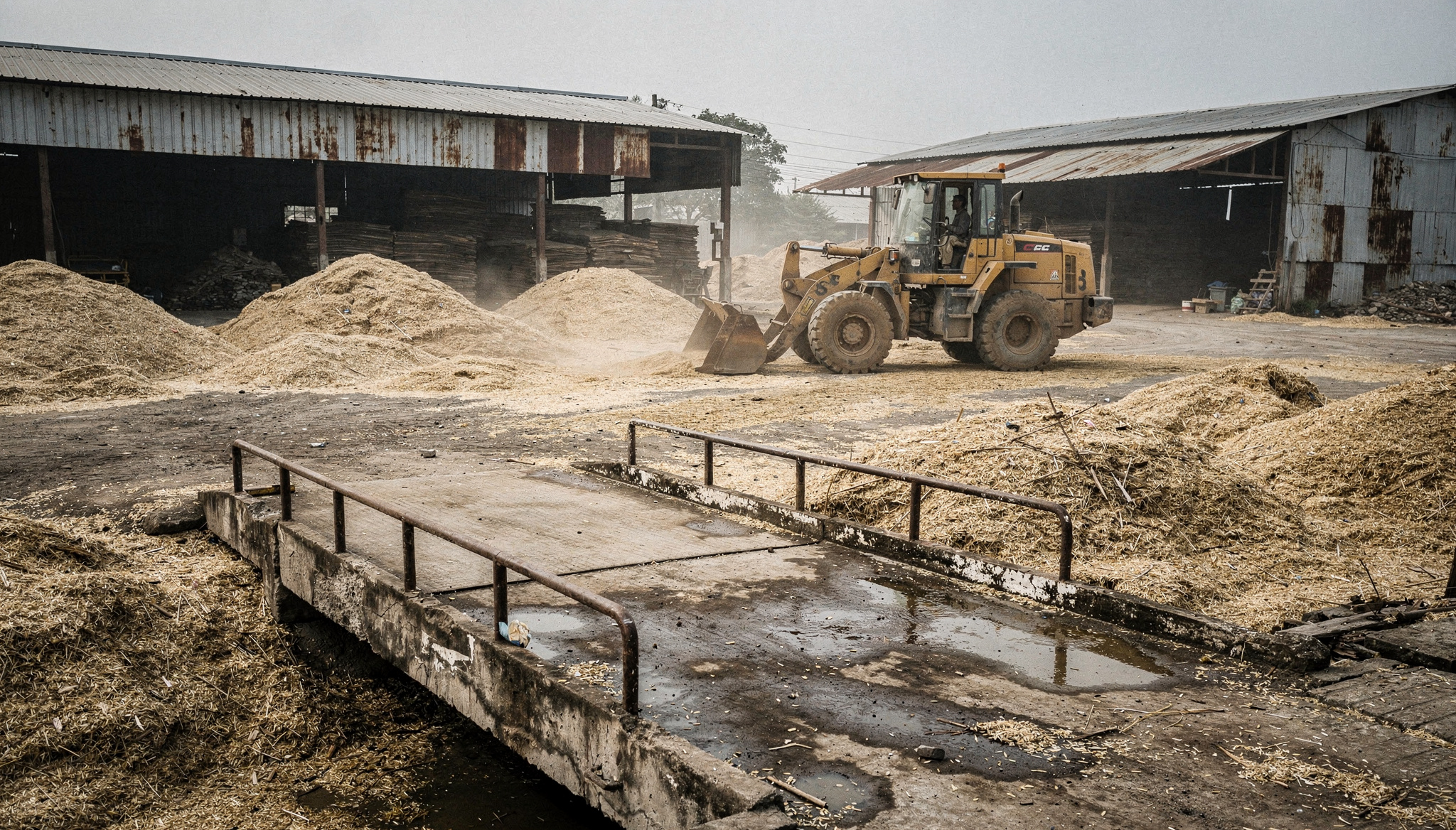
    Overcast mill yard with a loader moving rice husk and wood chips

    Collection is a network, not a photograph of a forest.

    Sustainability practices

    No energy-crop displacement

    We densify residues that already exist. Agricultural stubble that would have been burned in the open, and wood waste that would have been dumped, are the feedstock, not plantations grown to be burned.

    Open-field burning avoided

    Eastern and North Indian collection is built to take paddy straw and husk off the field after harvest, giving mills a fuel and farmers an alternative to fire.

    Separate product chemistry

    Wood pellets, agri-waste pellets, biochar, and charcoal are specified, stored, and sold as different materials. Mixing them in a catalogue is how buyers lose trust. We do not.

    Documented chain for wood pellets

    ISCC EU, FSC Chain of Custody, PEFC, Green Gold Label, and Japan FIT/FIP documentation apply to wood pellets. They are not a company-wide halo.